-
About UsMTL has been focusing on investment casting, including not only carbon steel metal components, but also stainless steel products and alloy steel products.

-
-
FactoryMTL has been focusing on investment casting, including not only carbon steel metal components, but also stainless steel products and alloy steel products.
-
NewsMTL has been focusing on investment casting, including not only carbon steel metal components, but also stainless steel products and alloy steel products.
Precision Casting Technology Supporting Advanced Manufacturing and High-Performance Industrial Production
May 26,2026
Quality precision casting OEM with accurate dimensions, durable materials and reliable industrial manufacturing performance
In modern industrial manufacturing, the demand for high-precision metal components continues to increase across sectors such as automotive, aerospace, energy, machinery, medical equipment, and industrial engineering. As products become more technically advanced and structurally complex, manufacturers require production methods capable of delivering high dimensional accuracy, excellent surface quality, and reliable mechanical performance. Among the various metal forming technologies used today, Precision casting has become one of the most important manufacturing processes for producing complex and high-performance metal parts.
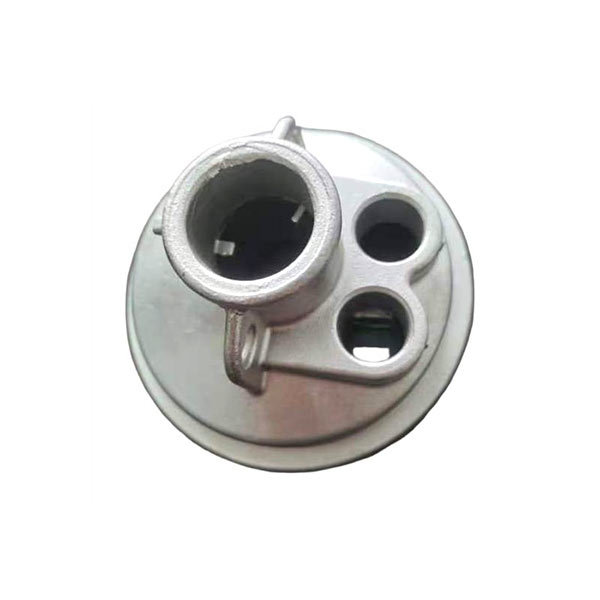
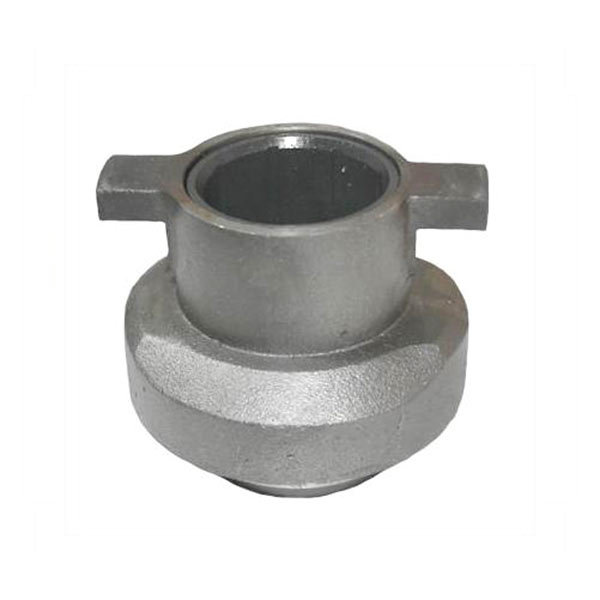
Precision casting, also known as investment casting, is a manufacturing method that creates metal components by pouring molten metal into highly accurate molds formed from wax patterns. This process allows manufacturers to produce intricate shapes and complex geometries that are difficult or expensive to achieve through traditional machining or forging methods. Precision casting is widely recognized for its ability to combine design flexibility, material efficiency, and high-quality surface finishing in a single production process.
The Precision casting process begins with the creation of a wax model that accurately represents the final product shape. Multiple wax patterns may be assembled into a single tree structure to improve production efficiency. The wax assembly is then coated with ceramic materials to form a durable shell mold. After the ceramic shell hardens, the wax is removed through heating, leaving a hollow mold cavity. Molten metal is then poured into the mold, and once solidified, the ceramic shell is removed to reveal the finished casting.
One of the most significant advantages of Precision casting is its exceptional dimensional accuracy. The process can produce parts with complex internal structures, thin walls, detailed contours, and tight tolerances while minimizing the need for secondary machining. This reduces manufacturing costs, shortens production cycles, and improves overall material utilization efficiency.
Surface quality is another major benefit of Precision casting technology. Compared with conventional sand casting methods, precision-cast components typically feature smoother surfaces and finer detail reproduction. This improved surface finish reduces the need for additional polishing or finishing operations and enhances the appearance and functional performance of the final product.
Material versatility is also an important characteristic of Precision casting. The process supports a wide range of metal materials, including stainless steel, carbon steel, alloy steel, aluminum alloys, brass, bronze, cobalt alloys, titanium alloys, and heat-resistant superalloys. This flexibility allows manufacturers to select materials according to specific application requirements such as corrosion resistance, heat resistance, wear resistance, or mechanical strength.
The automotive industry is one of the largest users of Precision casting technology. Precision-cast components are widely used in engine systems, transmission assemblies, turbochargers, exhaust systems, suspension parts, and fuel system components. The high dimensional accuracy and material consistency of precision-cast parts help improve vehicle performance, fuel efficiency, and operational reliability.
In the aerospace industry, Precision casting is essential for manufacturing high-performance components capable of operating under extreme temperature and pressure conditions. Turbine blades, engine housings, structural brackets, and aerospace fasteners are commonly produced using precision casting processes due to their ability to achieve complex geometries and superior material properties.
Industrial machinery and equipment manufacturing also rely heavily on Precision casting solutions. Pumps, valves, hydraulic systems, mining equipment, agricultural machinery, and industrial automation systems often require durable and accurately manufactured metal parts. Precision casting allows manufacturers to produce these components efficiently while maintaining consistent product quality.
The medical equipment industry also benefits from Precision casting technology. Surgical instruments, orthopedic implants, dental components, and medical device parts require high precision, excellent surface quality, and biocompatible materials. Investment casting processes help achieve these strict manufacturing requirements with stable repeatability.
Energy and power generation sectors increasingly use Precision casting for components operating under demanding conditions. Power plant equipment, oil and gas systems, renewable energy machinery, and industrial turbines require cast parts with high mechanical strength and heat resistance. Precision casting provides reliable solutions for these specialized applications.
Automation and digital manufacturing technologies are transforming the Precision casting industry. Computer-aided design systems, simulation software, automated shell production, and CNC-assisted finishing processes help improve production accuracy and efficiency. Real-time quality monitoring systems also support better process control and product consistency throughout manufacturing operations.
Quality control is a critical aspect of Precision casting production. Manufacturers conduct strict inspections including dimensional measurement, material composition analysis, non-destructive testing, hardness evaluation, and mechanical property testing. These procedures ensure that products meet industrial standards and customer specifications for safety and performance.
OEM and customized production services have become increasingly important in the global manufacturing market. Different industries require specialized designs, material selections, and structural configurations. Precision casting manufacturers provide tailored solutions according to customer drawings, technical specifications, and application requirements. This flexibility supports a wide range of industrial and engineering projects worldwide.
Environmental sustainability is also influencing the development of Precision casting technology. Improved material utilization, recyclable wax systems, energy-efficient furnaces, and waste reduction measures are helping manufacturers reduce environmental impact while maintaining high production efficiency. Compared with some traditional machining processes, precision casting can reduce raw material waste significantly.
The global demand for Precision casting continues to grow due to expanding industrialization, infrastructure development, and technological advancement. Industries increasingly require lightweight, high-strength, and highly precise metal components to improve operational efficiency and product performance.
Looking ahead, future developments in Precision casting are expected to focus on smarter automation, advanced alloy materials, additive manufacturing integration, and improved production sustainability. Artificial intelligence and digital simulation technologies may further optimize casting design and production processes, improving quality and reducing manufacturing costs.
In conclusion, Precision casting remains one of the most advanced and versatile metal manufacturing technologies in modern industry. Its ability to produce complex, accurate, and high-performance metal components makes it essential across automotive, aerospace, energy, medical, and industrial sectors. As manufacturing technology continues to evolve, Precision casting will continue to play a vital role in supporting efficient, reliable, and innovative industrial production worldwide.
CONTACT US
Office Add:No. 51 Fuqian St., EDZ, Dongying, Shandong, 257091 China
Plant Add:No. 88 Lingzhihou St., EDZ, Gaomi, Shandong, 261500 China


POPULAR PRODUCTS
CONSULTAR
Copyright : Dongying Maitlai Import and Export Co., Ltd. Powerby : CEGLOBAL | SEO | Privacy agreement